Smart Pulveriser Technology Innovations by Dev PlastoTech India for Maximum Efficiency
Boost Productivity with Smart Pulveriser Technology in today’s competitive manufacturing environment, where maintaining consistent production output has become a major challenge for many industries. Manufacturing companies, especially those involved in plastic processing and recycling, often face increasing pressure to manage higher volumes of material without affecting product quality. In such demanding conditions, a Pulveriser Machine becomes an essential solution for improving grinding efficiency and ensuring smoother, more reliable plant operations.
In everyday factory work, breaking down materials into smaller pieces is a key activity before further processing. Whether you’re dealing with scrap plastic or new polymer, an effective grinding setup helps keep things moving smoothly and avoids halts on the production line.
Today’s grinder technology is built to boost output while cutting down on hands-on work and reducing downtime, enabling businesses to stay efficient and meet increasing production needs.
Real-World Hurdles in Plastic Factories
Many plastic factories operate under tight timelines. High demand, limited breaks, and the need for steady output across shifts present operational difficulties.
A frequent problem is uneven particle size from the grinder. When material isn’t processed uniformly, it negatively impacts later steps like pushing material through, shaping, or mixing.
Another issue is equipment strain during busy times. Older grinding systems often struggle with large material volumes, leading to frequent shutdowns or the need for repairs.
A properly designed industrial grinder helps tackle these issues by providing steady grinding performance and reliable outcome uniformity.
How Does a Grinder Machine Boost Production?
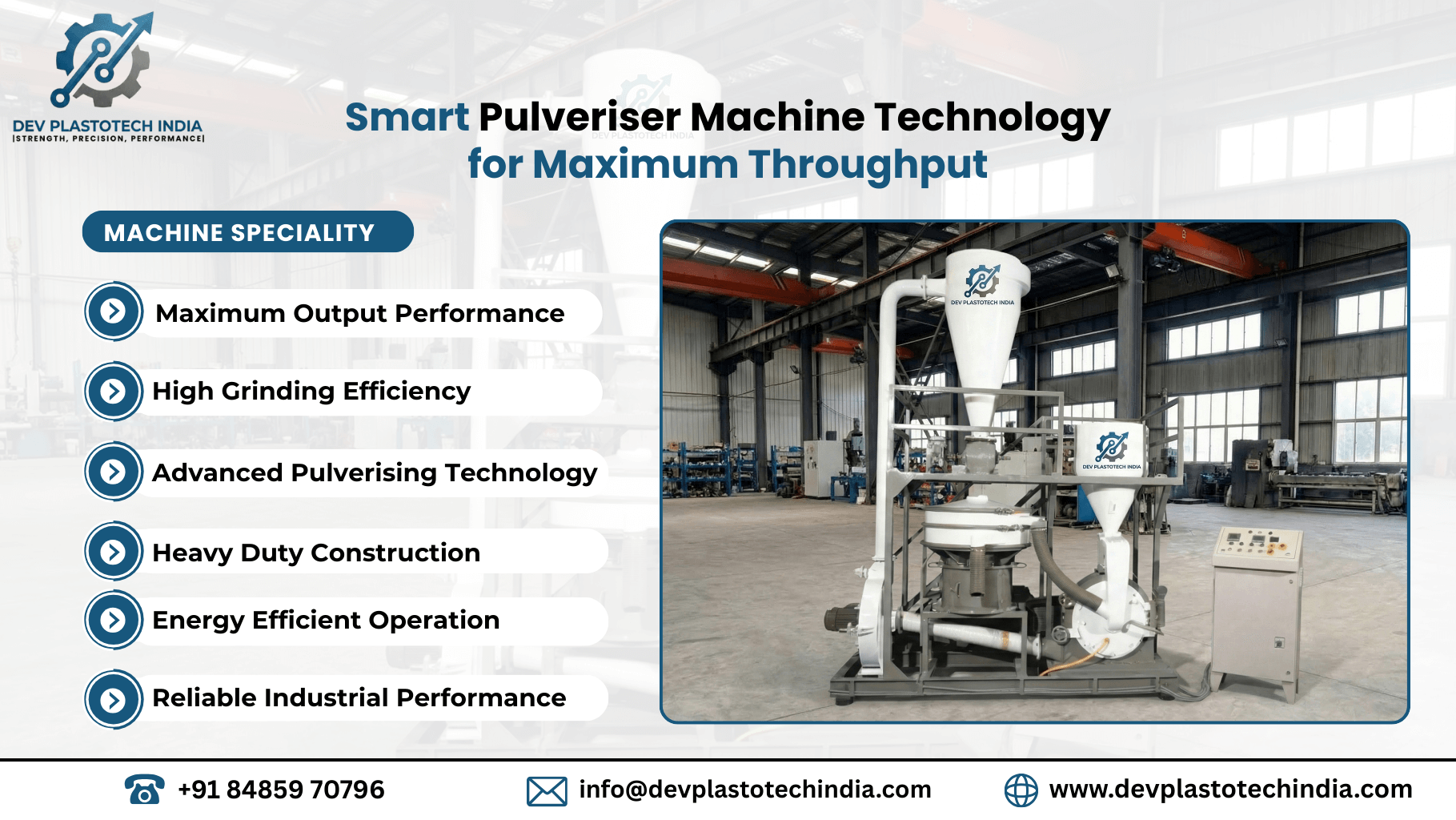
A Grinder Machine is built to turn plastic materials into fine dust through a controlled crushing process. This dust is then used in various manufacturing applications.
In daily plant activities, these machines help maintain a consistent flow by speeding up processing times. The equipment handles materials quickly and consistently, allowing teams to hit output goals more readily.
Another benefit is better material use. Fine and even grinding lets makers reuse plastic waste or recycled material more effectively, cutting down on the cost of new inputs.
For companies focused on plastic reuse, this kind of plastic grinding equipment becomes an important part of sustainable operations.
Steady Output Across Shifts with Grinder Technology
Keeping production quality the same across different work periods can be hard in busy factories. Differences in grinding results often happen due to equipment limits or manual adjustments.
A modern Grinder Machine helps stabilise this by maintaining controlled grinding parameters. Advanced material breaking systems ensure particle size stays consistent, no matter how much is processed.
This uniformity helps later processes run more easily. Extrusion lines, moulding setups, and mixing units benefit from consistent input material quality.
In many plastic processing plants, this level of dependability greatly aids overall production planning.
Promoting Safer and More Organised Plant Work
Safety and efficient workflow are top concerns in manufacturing settings. Older grinding methods often need significant manual handling, which can increase worker tiredness and safety risks.
Up-to-date plastic processing gear lessens these worries by automating much of the grinding task. Operators can manage the system with minimal hands-on effort.
Improved equipment design also helps lower dust creation and machine shaking, leading to safer and more pleasant working conditions on the factory floor.
When machines operate dependably, maintenance crews can also concentrate more on planned upkeep instead of fixing unexpected breakdowns.
Managing Heavy Production Loads in Modern Plants
Industrial manufacturing now requires equipment that can handle continuous use. Plants processing scrap plastic or large quantities of polymer materials need machines that can run for long periods without losing performance.
An industrial grinder is specifically built for these demands. It supports large-scale breaking needs while keeping steady output quality.
Many makers rely on advanced machines from established industry specialists like Dev PlastoTech India, who focus on practical solutions for plastic processing plants. Their systems are frequently used in recycling areas, polymer processing units, and general industrial manufacturing settings.
Manufacturers interested in exploring modern grinder technology can find more details at: https://www.devplastotechindia.com/
In Summary:
Effective material breaking is a vital step in current manufacturing workflows. Without dependable grinding systems, production delays, uneven material quality, and increased hands-on labour can harm overall plant performance.
A well-engineered Grinder Machine helps resolve these issues by delivering uniform particle size, boosting processing effectiveness, and supporting continuous production needs.
For factory owners, site supervisors, and production teams, investing in reliable plastic processing gear is about more than just machinery—it’s about building a stable and productive manufacturing setup that can support future expansion.
FAQs
1. What is a Grinder Machine used for in plastic processing?
- A Grinder Machine is used to crush plastic materials into fine powder, which can be reused in manufacturing steps like extrusion, shaping, or mixing.
2. How does a grinder enhance manufacturing output?
- It boosts grinding productivity, maintains steady particle size, and supports ongoing plant operations, helping factories reach their output goals.
3. Can grinder machines process recycled plastic materials?
- Yes. Many plastic recycling sites use industrial grinders to break down used plastic into reusable powder for new production runs.
4. Which sectors frequently use grinder machines?
- Grinder machines are widely utilised in plastic processing, polymer manufacturing, recycling centres, and chemical material handling industries.
5. What aspects should makers consider when selecting a grinder machine?
- Key points include breaking capacity, uniformity of particle size, energy usage efficiency, upkeep needs, and compatibility with current production setups.
#PulveriserMachine #PlasticProcessing #IndustrialMachinery #PlasticRecycling #ManufacturingTechnology #FactoryEfficiency #MaterialProcessing #DevPlastoTechIndia #Four Bi Axial Machine
